 FluidPeek
IBM
Immersed Boundary MethodRepresents complex geometry on Cartesian grids.

About FluidPeek
Explore fluid dynamics directly in your browser. Free, with no installation, and powered by your own GPU.
Public study · Vehicle airflow02 / Why FluidPeek?
Commercial CFD can be costly and complex to set up, and cloud services can impose compute limits or fees. FluidPeek was built to lower those barriers.
03 / Powered by Your GPU
WebGPU runs parallel CFD calculations on your device without a dedicated cloud GPU. Speed and mesh capacity depend on the GPU and the memory the browser can use, whether dedicated or shared.
04 / Lightweight by Design
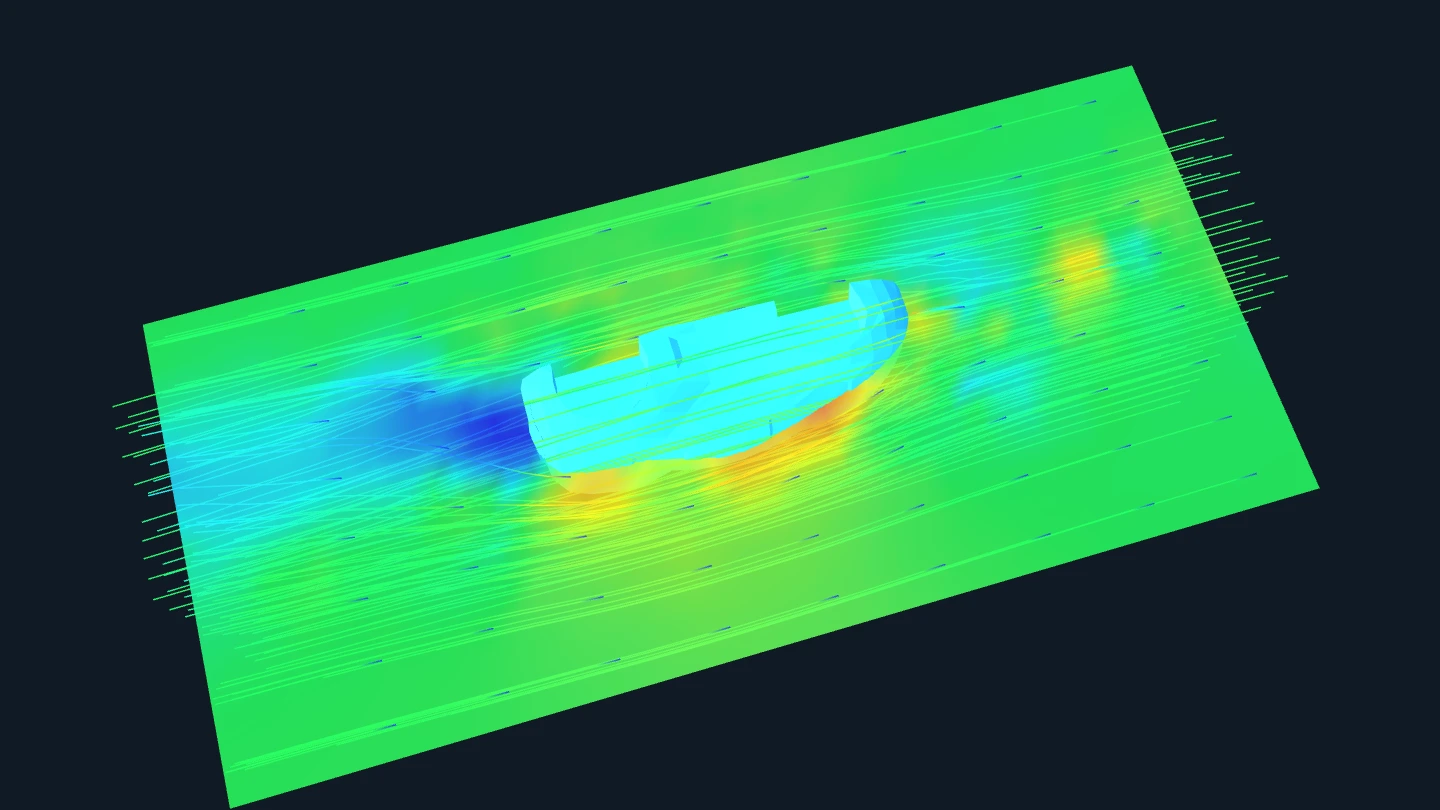
Memory-conscious solvers and Octree AMR concentrate cells near features that need them. Explore flow around complete vehicles on compatible laptops, within hardware and resolution limits.
05 / Technology
Adaptive Cartesian meshes, immersed boundaries, and GPU-accelerated solvers work together.
Represents complex geometry on Cartesian grids.
Describes surfaces using signed distance.
Concentrates resolution where it matters.
Uses multigrid preconditioning to solve pressure equations.
06 / Workflow
Import a model, configure the simulation, and inspect velocity and pressure in interactive 3D.
07 / Use Cases
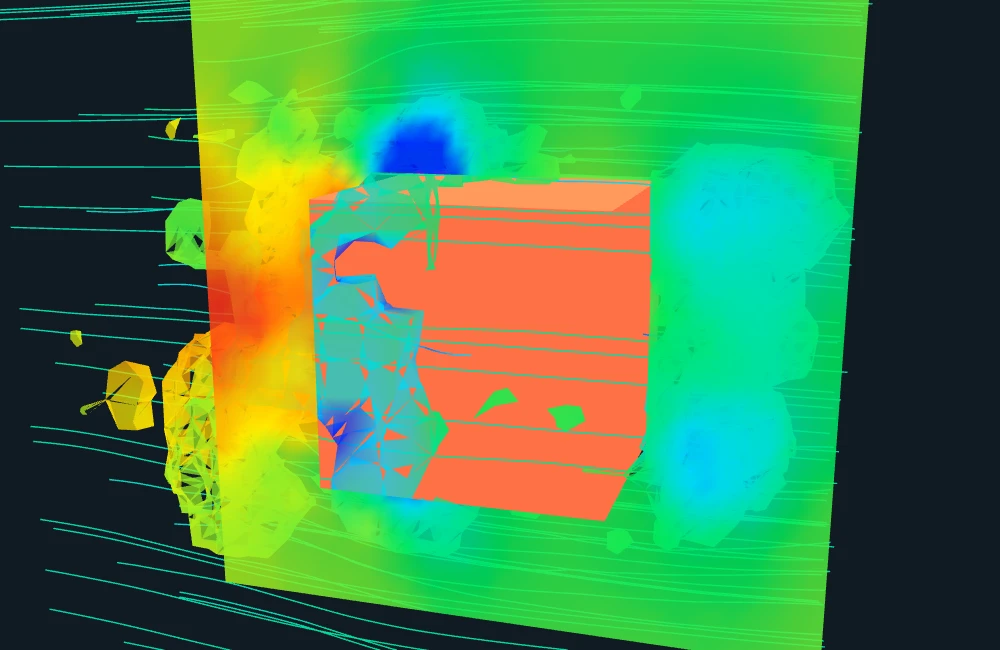
Investigate airflow patterns and aerodynamic behavior during early design studies.
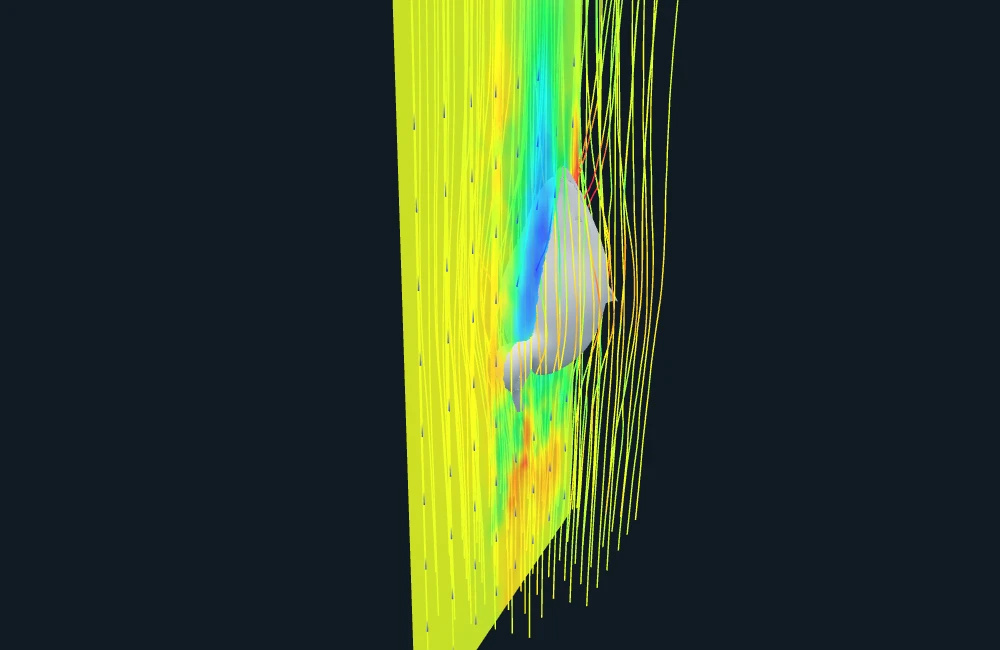
Make fluid mechanics easier to understand through interactive 3D simulations.
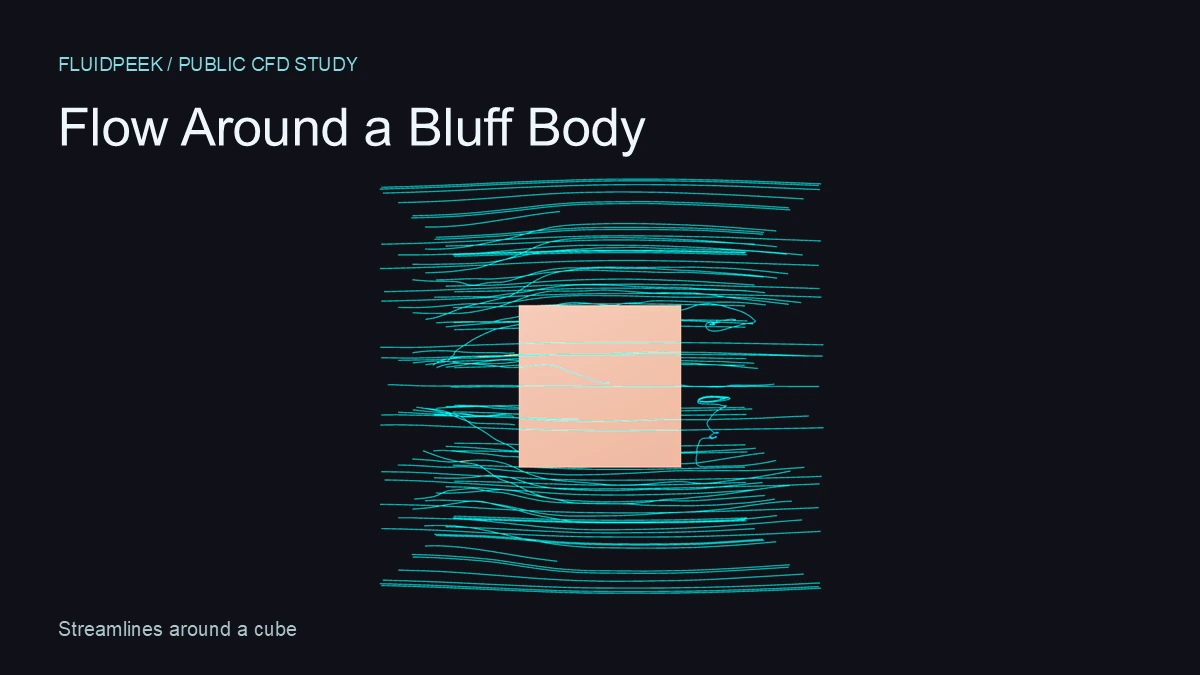
3D Presentations
Export streamlines and contours as a 3D GLB model. In compatible desktop versions of Microsoft PowerPoint, rotate the model and change viewpoints to explain the flow.
08 / Continuous Development
FluidPeek is continuously evolving, with ongoing improvements in simulation performance, numerical methods, and 3D visualization.
Simulation accuracy depends on mesh resolution, numerical models, boundary conditions, and convergence. Engineering-critical results require independent validation.